Boat berths: template first, then cut foam to the shape
As an Amazon Associate I earn from qualifying purchases. What that means.
Quick answer
A V-berth is Custom only : tapered, often split around a filler, and never a stock rectangle. The workable path is a cardboard template of the berth, then Trim to fit foam cut to it - with foam chosen for damp tolerance rather than for feel.
Two things separate a berth from every other bed on this site: the shape is not rectangular, and the environment is wet. Both push the answer toward foam you cut yourself.
Take the template
Measure the sleeping platform itself - corner to corner, inside any side rails - not the old mattress, which may have compressed or been trimmed by a previous owner. Write down width, length and the height you have under a slide-out or overhead cabinet. Order to the platform.
For a berth, tape sheets of cardboard together in place, scribe the hull line with a pencil held flat against the side, and cut the cardboard back until it drops in cleanly. That template, not a set of measurements, is what the foam gets cut to. Mark which face is up and which end is the bow before you lift it out.
Foam that survives a hull
Standard bedding foam holds water. Marine work uses foams built to drain and dry - closed-cell sheet foam and dryfast-style reticulated open-cell foam are the two families to look at. The trade-off is feel: quick-drying foam is firmer than a mattress you would put in a bedroom, and a thin comfort layer on top is a normal way to solve that.
Quick-drying foam that can actually be bought
An honest finding from checking this category: the marine-grade dry-fast lines from the foam houses are sold through their own sites, not through the marketplace. What is available in the listings covers smaller sheets, which suits a berth cushion cut from a template but not a full-berth slab in one piece. Neither of these has a manufacturer page for the exact size.
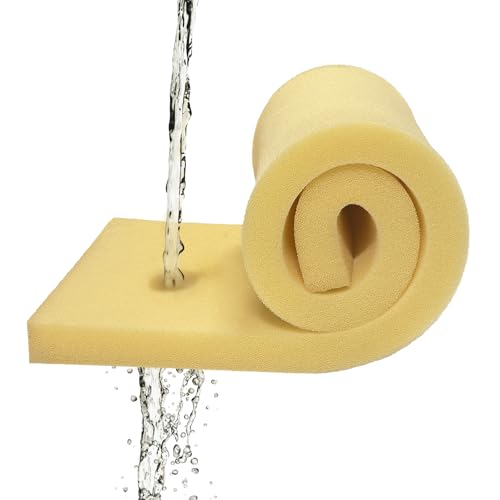 Trim to fit 16 x 60 x 3
 FoamRushDry Fast Outdoor Foam Sheet, 3 in
A three-inch dry-fast sheet at 16 by 60 - a cockpit or settee cushion, or one half of a split V-berth once cut to a template.
Check size and availability(paid link)
 Trim to fit 24 x 72 x 3
 SUNROXDryFast Upholstery Foam, 3 in
A larger 24 by 72 dry-fast rectangle at the same three inches. Two of these cover most V-berth halves before the taper is cut.
Check size and availability(paid link)
Airflow underneath is not optional
A cushion sitting flat on a solid berth top in a humid hull stays damp on the underside all season. Spacer matting or slats gives it a path to dry. If a berth cushion has ever smelled musty, that is the problem, and replacing the foam without fixing the airflow reproduces it.
 Trim to fit 59 x 83
 BhyhokAire-Flow Mattress Underlay
A mesh-fibre underlay roll that lifts the cushion off the berth top so the underside can dry. Cut to the berth outline with scissors.
Check size and availability(paid link)
 Trim to fit 59 x 83
 GRETJOBVentilated Underlay Tiles
Interlocking plastic tiles doing the same job. In a tapered berth the tiles are easier to work with than a roll, because the shape is made by adding and removing pieces.
Check size and availability(paid link)
What this site covers, and what it does not
Cut-to-fit foam sheets and stock rectangles that can be trimmed are what get recommended here. Made-to-order marine mattress shops do good work and are worth knowing about, but they are order-only businesses whose specifications cannot be checked the way a listed product can, so they appear as context rather than as recommendations. The reasoning is on how we test.
Questions people ask
What size is a V-berth mattress?
It is a shape, not a size. A V-berth tapers toward the bow and often has a filler section between two halves, so the replacement is defined by a template of the actual berth rather than by width and length.
Can I buy a ready-made V-berth mattress?
Made-to-order marine mattresses exist from custom shops. This site covers the other route: foam sold in sheets or in stock rectangles, cut to a template you take yourself. Custom order-only makers are named here where relevant but are not recommended products, because they are outside what this site can check or link.
What foam should go in a boat berth?
Something that tolerates damp. Closed-cell and dryfast-style open-cell foams are used in marine work specifically because they drain and dry rather than holding water, which ordinary bedding foam does.
Why does the berth cushion smell musty?
Because it is sitting on a solid berth top in a humid hull with no airflow underneath. Spacer matting or slats under the cushion is the usual fix, and it matters more than the foam choice itself.
Sources
- Manufacturer specification pages for each foam product named, checked on the brand's own site
Last updated 2026-08-03